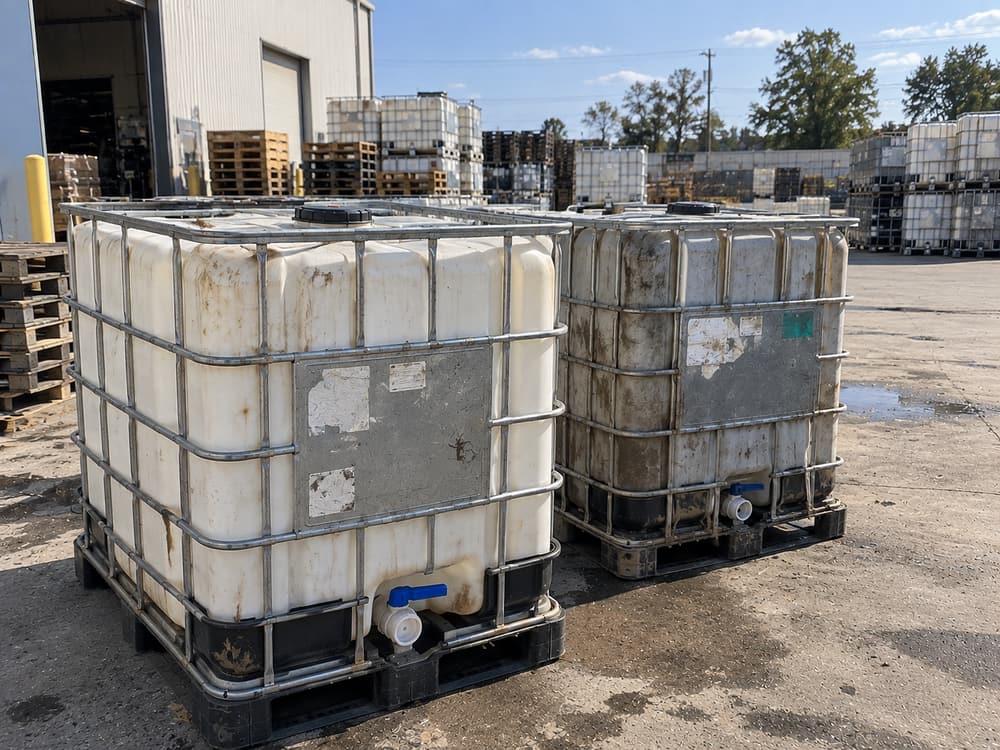
IBCs can be found throughout warehouses, factories, and distribution facilities. They contain liquids, powders, and other loose products. But transporting a full IBC requires equipment, preparation, and operators.
Selecting between a forklift jib or dedicated IBC handling gear will be depending on the load, the chore together with the container style and design. Selectivity, the key factor in reducing risks of mishandling and optimising workflow.
What is a Forklift Jib?
Forklift jib is an attachment that increases the reach of a forklift. It can help lift suspended loads within the limitations of the jib and lifting points.
A jib may find use in moving compatible loads into difficult to access locations in some settings. But sometimes it isn’t appropriate to pick up an IBC with a jib. The container should contain approved lifting points, the attachment should be rated appropriately for load, and how it is lifted.
In using an attachment, operators should also consider that any capacity for the forklift will be reduced. The machine’s safe working capacity can be influenced by the load centre and attachment weight.
Check the forklift attachment instruction before using a jib. Never pick up an IBC by its cage, outlet valve or other parts unless the manufacturer specifically approves that method.
When Dedicated IBC Accessories are More Justified
Specialised IBC accessories are available to assist you in securing or positioning compatible containers. What kind of equipment you need is based on if you want to move an IBC, secure it, or transfer it.
More specialised handling systems provide a better fir than a standard attachment. They also provide a means to suppress superfluous motion, when they are designed for the container, and indeed, the duty.
Before choosing an accessory, check:
- Compatibility: Is it appropriate for your IBC size and type?
- Load rating: Does it support the entire load of the container weight?
- Well-oiled, locked loading: Once held − does it lock in the cargo?
- Operating conditions: Is it dedicated to the site/material?
- Maintenance: How easy is it to conduct inspections and service the equipment?
Obey the manufacturer’s specifications and applicable requirements for safe working at all times.
Compare the Task Before Choosing
A forklift jib and its dedicated IBC equipment have different applications. Jibs are also made for lifting capable suspended loads, while uniquely designed accessories may be more suited to adhere or manipulate a certain bin.
Do not make selection based on ease alone. When to get the lift height, distance, floor environment, and not reliable take care of swing force you attendants in unloading. Before moving any IBC containing harmful liquid it is wise to check the spill risk and what the product requires when being moved.
And a risk assessment can help identify the safest approach. If the load cannot be secured or lifted in accordance with these instructions, stop, and seek advice from a competent person.
Safe Handling Starts with Training
Operators must be trained on both the type of forklift, the specific attachment, and the lifting method. Make sure to inspect your equipment before use, and take damaged attachments out of commission.
Keep people away from suspended loads. Drive at a slow, steady pace; avoid sudden directional changes; and never exceed the rated load capacity. Never place anyone under a raised IBC.
Choose Equipment That Fits Your Business
Many of these endorsed lifting duties might be met via way of means of a forklift jib, and others devoted to IBC accessories will offer an advanced solution for a few field handling requirements.
It is important to confirm compatibility, calculate the load then use that equipment with the manufacturer first. Proper total solution will assist rendering its operations better so that safer handling, less non-conformance, as well as more reliable warehousing practice.
Quick Summary
- IBCs are commonly used in warehouses and require careful handling to prevent mishandling and optimize workflow.
- A forklift jib is an attachment that extends a forklift’s reach, but it should only be used if the IBC has approved lifting points.
- Dedicated IBC accessories may provide better support and control compared to standard attachments, especially for securing or transferring IBCs.
- Operators must be trained on the specific equipment and lifting methods to ensure safe handling and avoid accidents.
- Before moving an IBC with harmful substances, it is critical to assess spill risks and follow manufacturer guidelines for safe transportation.
- Equipment compatibility, load ratings, and operational conditions must be verified before selecting the appropriate tools for handling IBCs.